How to Build a Daily Focus Habit with Goals and Streaks
Turn focused study or work into a daily habit: start tiny, anchor it to your routine, set a realistic goal, use streaks wisely and recover from missed days.
On this page
- How habits actually form
- 1. Start smaller than feels useful
- 2. Anchor it to something you already do
- 3. Make starting effortless
- 4. Set a daily goal you can hit on an ordinary day
- 5. Use a streak, but design it well
- 6. Use a reminder for the fragile early weeks
- 7. Make progress visible
- 8. Plan for bad days
- 9. Review weekly and adjust
- A 30-day plan to build the habit
- Questions people ask
Key takeaways
- Habits form through repetition in a consistent context; in one well-known study it took 66 days on average, with a wide range.
- Start smaller than feels useful: one focus session a day is a real habit.
- Anchor your session to something you already do, at the same time and place.
- Use a goal and a streak for motivation, keep the bar low enough for bad days, and never miss twice.
Motivation gets you started. Habits keep you going when motivation doesn't show up, which, during a long semester or a big project, is most days. The goal isn't to feel like studying or working deeply every day. It's to make it so normal that you do it anyway.
Here's how to build a daily focus habit that lasts, using small sessions, smart goals and streaks that motivate instead of punish.
How habits actually form
A habit is a behaviour that has become automatic in a particular context. You don't decide to brush your teeth each morning; the bathroom and the morning do it for you. Habits form through repetition in a consistent context.
How long does that take? In a widely cited study, Phillippa Lally and colleagues at University College London followed people building new daily habits. On average it took about 66 days for the behaviour to feel automatic, but the range was huge, from 18 to 254 days. Two lessons: it takes a while, and missing a single day had little effect on progress.
1. Start smaller than feels useful
The most common mistake is starting with a goal that needs a perfect day: “3 hours of study every day.” It works for a week, then life happens, and the whole thing collapses.
Instead, start with something almost too easy: one focus session a day. Twenty-five minutes. On good days you'll do more, but the habit is defined by the one. Behaviour scientist BJ Fogg makes the same point in his work on tiny habits: shrink the behaviour until it's easy, then let it grow.
2. Anchor it to something you already do
Link your session to an existing routine: “After breakfast, I start one focus session.” “When I get home from class, I make tea and start the timer.” The existing routine becomes the cue. Same time, same place, same first step.
3. Make starting effortless
- Leave your materials out and the next task written down.
- Have your timer one tap away (a home screen widget helps).
- Decide the next day's first task the evening before.
4. Set a daily goal you can hit on an ordinary day
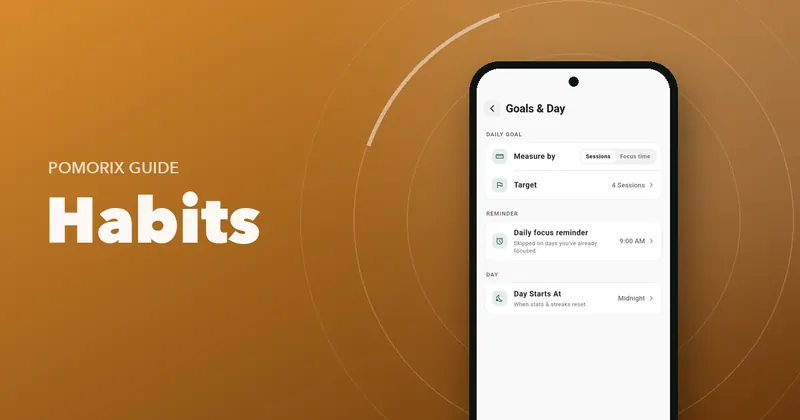
Once the habit of starting is established (a couple of weeks of daily sessions), add a daily goal. Base it on what you actually do on normal days, not your best day. Read how many pomodoros a day is realistic for benchmarks.
5. Use a streak, but design it well
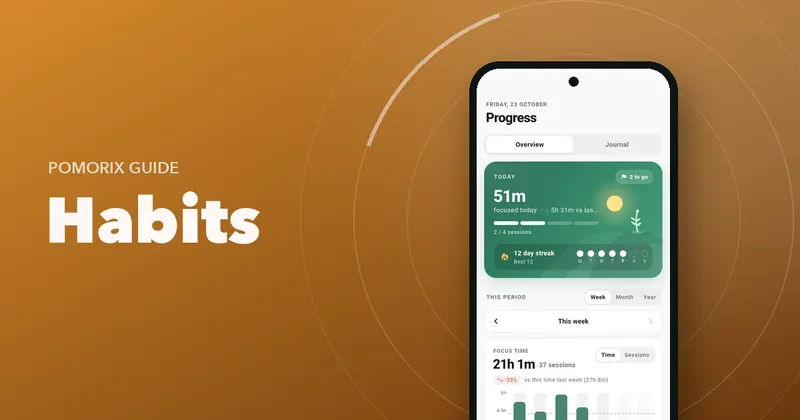
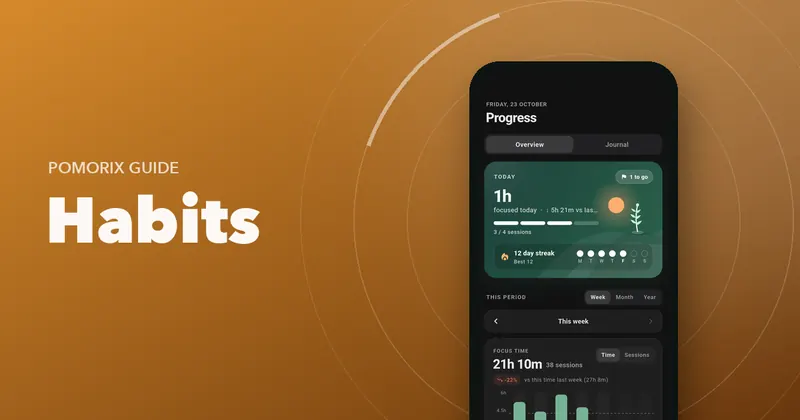
A streak (the number of days in a row you've focused) is a simple, powerful motivator. On day 12, you don't want to be the person who breaks it. To make streaks work for you:
- Keep the bar low. One session should be enough to count the day.
- Make it visible. Seeing the number daily is what gives it pull.
- Never miss twice. If you miss a day, the next day matters most. One miss is noise; two starts a new pattern.
- Celebrate records, not perfection. Beating your best streak is a great goal.
6. Use a reminder for the fragile early weeks
In the first month, a habit is easy to forget, especially on unusual days. A daily reminder at your planned time is a cheap insurance policy. Once the habit is automatic, you'll barely need it.
7. Make progress visible
Seeing your focus add up over weeks is deeply motivating, especially on long goals where the finish line is far away. A calendar with filled-in days, weekly totals that grow, a year-long heatmap: visual progress gives you a reason to show up today. More in how to track your study hours.
8. Plan for bad days
Bad days will come: illness, travel, exams in other subjects, just feeling awful. Decide in advance what the minimum looks like: “On bad days, one 10-minute session counts.” A plan for bad days is what separates habits that survive a semester from habits that die in week three.
9. Review weekly and adjust
Each week, look back for five minutes: how many days did you focus? Was the goal too easy or too hard? What got in the way? Adjust the goal, the time or the cue. Habits aren't set once; they're tuned.
A 30-day plan to build the habit
| Days | Goal | Focus on |
|---|---|---|
| 1–7 | 1 session a day | Same time and place, every day |
| 8–14 | 1–2 sessions | Write tomorrow's first task each evening |
| 15–21 | 2–3 sessions | Set a daily goal; protect the streak |
| 22–30 | 3–4 sessions | Weekly review; plan your hardest work for your best hours |
Struggling to start at all? Read how to stop procrastinating first. Then start your first session today, and let the habit grow from there.
Questions people ask
How long does it take to build a study habit?
It varies a lot. In a well-known 2010 study by Phillippa Lally and colleagues, it took participants anywhere from 18 to 254 days for a new behaviour to feel automatic, with an average of about 66 days. Expect a couple of months of consistent practice.
What is a good daily focus goal for beginners?
One to three focus sessions a day (25 to 75 minutes) is a great start. Increase it once you hit the goal comfortably on most days for two weeks.
Are streaks good for motivation?
For many people, yes. A visible streak makes you want to protect it. Keep the requirement for keeping it low (for example, one session), so busy days don't break it, and don't let a broken streak stop you from restarting.
What should I do if I miss a day?
Just restart the next day. Missing one day has little effect on building a habit. The bigger risk is letting one missed day turn into a week, so aim to never miss twice in a row.