Pomodoro Technique for ADHD: How to Make Timers Work for Your Brain
Practical ways to adapt the Pomodoro Technique for ADHD: shorter sessions, visible time, handling hyperfocus, body doubling, transitions and rewards.
On this page
Key takeaways
- Timers help many people with ADHD by making time visible, which counters 'time blindness'.
- Adapt the method: shorter sessions, flexible lengths and fewer rigid rules.
- Plan for hyperfocus with a gentle nudge rather than a hard stop.
- Use novelty, rewards and other people to make starting easier. This is support, not a replacement for professional care.
A quick note: this article shares practical, everyday strategies. It isn't medical advice and isn't a substitute for diagnosis or treatment. If ADHD significantly affects your life, a doctor or qualified specialist can help you find the right support.
If you have ADHD, you've probably been told to “just use a planner” or “just focus”. Neither is helpful. But many people with ADHD find that one simple tool genuinely helps: a timer. Used the right way, the Pomodoro Technique can make starting easier, make time visible and add structure to the day.
Used rigidly, it can feel like one more system you're failing at. Here's how to adapt it for an ADHD brain.
Why timers can help with ADHD
They make time visible
Many people with ADHD describe “time blindness”: difficulty sensing how much time has passed or how long things will take. Psychologist Russell Barkley, a leading ADHD researcher, has long recommended making time external, putting it outside your head where you can see it. A countdown on the screen does exactly that.
They make starting smaller
Task initiation is often the hardest part. “Write the report” is a wall. “Work on the report until this 15-minute timer ends” is a step. The timer gives you permission to stop, which makes it far easier to begin.
They create urgency
Many people with ADHD work best close to a deadline. A short timer creates a small, safe deadline right now, instead of relying on panic three days before the real one.
How to adapt the Pomodoro Technique for ADHD
1. Make sessions shorter, at least at first
The classic 25 minutes isn't sacred. If 10 or 15 minutes is what you can do today, do that. Completing short sessions builds momentum. You can always add five minutes once you're in.
2. Keep the timer where you can see it
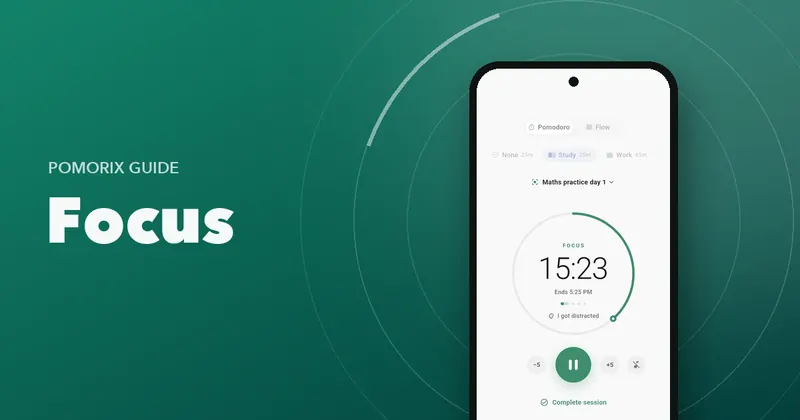
Out of sight is out of mind. A visible countdown (on screen, on a widget, on a timer on your desk) keeps time external. Seeing the ring fill is a gentle, constant reminder of what you're doing.
3. Plan for hyperfocus
Hyperfocus is the other side of ADHD attention: getting absorbed so deeply that hours vanish, along with meals and other commitments. A hard alarm in the middle of hyperfocus can be jarring, so many people ignore it. Alternatives:
- Use a count-up timer for absorbing work, with a gentle nudge after 60 or 90 minutes.
- When the nudge comes, do a quick check-in: water, food, other commitments?
- Keep classic countdowns for tasks you're avoiding.
Learn more in Flowtime vs Pomodoro.
4. Make breaks structured, and make them end
Breaks are where many ADHD sessions go off the rails: a quick look at the phone turns into an hour. Help yourself:
- Decide what the break is for before it starts: water, a stretch, a snack.
- Use movement: walking, stretching, a few jumping jacks.
- Let the timer end the break for you, with an alert you can't miss.
- Consider auto-starting the next session, so returning isn't a decision.
5. Write down the very first step
Before you start the timer, write the first physical action: “open the file”, “read question 1”. When your mind goes blank at the start, the note tells you what to do.
6. Capture distractions instead of following them
Ideas and urges will come mid-session. Keep a notepad or a “later” list nearby and dump them there. Tapping a quick “got distracted” counter can also help you notice drift without judging yourself.
7. Add novelty
ADHD brains often crave stimulation. Instead of fighting it, feed it in low-cost ways:
- Change your location for different sessions.
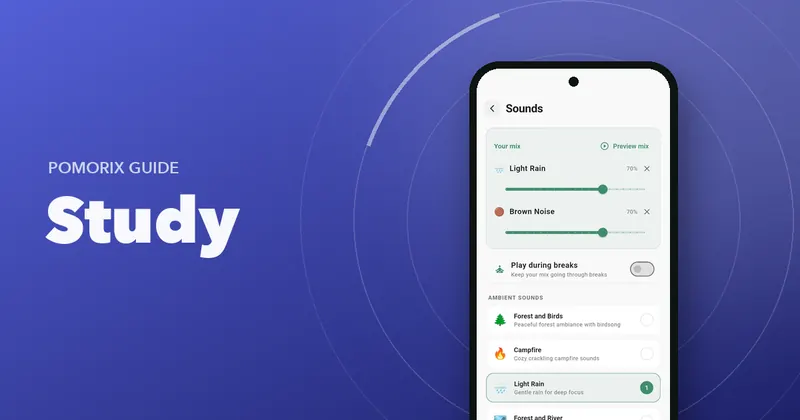
- Use background sounds such as rain, café noise or brown noise. Some people with ADHD find steady noise helps. See choosing focus sounds.
- Switch tasks between sessions, not during them.
8. Try body doubling
Working alongside someone else, in person or on a silent video call, is a strategy many people with ADHD swear by. The other person doesn't help with your task; their presence simply makes it easier to start and stay with it. Combine it with a shared timer.
9. Reward the session, not the outcome
Finishing a whole project takes too long to be motivating. Reward finishing a session: a tick, a small treat, a growing streak. Visible progress delivers the quick feedback that keeps you coming back.
10. Drop the rules that don't serve you
The classic rules (exactly 25 minutes, never pause, four before a long break) are a starting point. If pausing for the door doesn't ruin your focus, pause. If 3 sessions before a long break suits you better than 4, change it. The best system is the one you'll keep using.
A sample ADHD-friendly routine
- Write today's 1 to 3 priorities. Just three.
- Pick the first and write its first physical step.
- Phone out of reach, Do Not Disturb on, focus sound on.
- Start a 15-minute timer. Begin with the first step.
- When it rings: stand up, drink water, move (5 minutes).
- Next session: 15 or 25 minutes, depending on how it went.
- After 3 sessions, take a long break with food and movement.
- End the day by ticking off what you did, however small.
Be kind to yourself
Some days, the timer won't help. That's not a personal failure; ADHD is variable. Restart the next day with one short session. And remember that strategies like these work best alongside professional support where you need it. For more on getting started when it feels impossible, read how to stop procrastinating.
Questions people ask
Does the Pomodoro Technique work for ADHD?
Many people with ADHD find it helpful, especially when adapted: shorter sessions, a visible timer and flexible rules. Research specifically on Pomodoro and ADHD is limited, so treat it as a tool to try and adjust, alongside any professional support.
What Pomodoro length is best for ADHD?
There's no single answer. Many people start with 10 to 20-minute sessions and short breaks. On good days, or for interesting tasks, longer sessions may work. Let the task and your energy decide.
How do I stop hyperfocus from taking over my day?
Use a timer as an outside reminder. A gentle nudge after 60 or 90 minutes that asks you to check in, drink water and move is often more effective than a hard alarm you'll ignore.
What is body doubling?
Body doubling means working alongside another person, in the same room or on a video call, while each of you does your own task. Many people with ADHD find the quiet presence of someone else makes it easier to start and stay on task.