Flowtime vs Pomodoro: Which Focus Method Fits the Way You Work?
How the Flowtime Technique (Flowmodoro) differs from the Pomodoro Technique, the pros and cons of each, and how to combine them for study and deep work.
On this page
Key takeaways
- Pomodoro uses fixed blocks with a countdown; Flowtime uses a count-up timer and you stop when your focus dips.
- In Flowtime your break is proportional to your focus, for example 1 minute of rest for every 5 minutes worked.
- Pomodoro is better for starting, avoiding procrastination and boring tasks; Flowtime is better for creative and deep work.
- Many people combine them: Pomodoro to get going, Flow once momentum builds.
The Pomodoro Technique is simple: work 25 minutes, break 5. But sometimes the alarm rings just as you've finally got into the work, and stopping feels like a crime. That frustration is why the Flowtime Technique, also called Flowmodoro, became popular.
Here's how the two methods differ, when each one works best, and why you probably want both.
Pomodoro in one paragraph
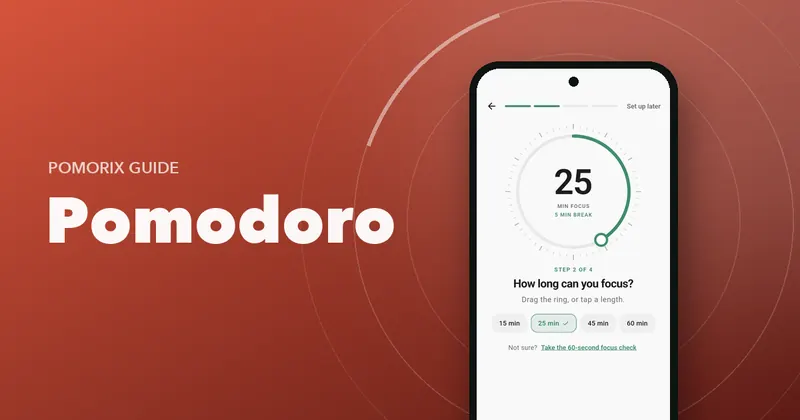
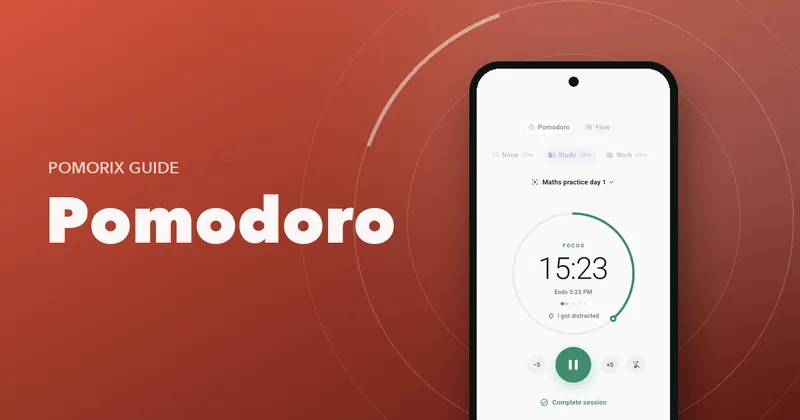
You choose a task, set a countdown (classically 25 minutes), work until it rings, take a short break, and repeat, with a longer break after four sessions. The fixed length creates a clear finish line, makes starting easy and builds in regular rest. Read the complete Pomodoro guide for the full method.
Flowtime in one paragraph
You choose a task, start a count-up timer and work until your focus naturally starts to dip: you notice you're rereading lines, reaching for your phone or feeling tired. Then you stop and take a break proportional to how long you worked. If you worked 40 minutes with a 5:1 ratio, you rest 8 minutes. The idea, popularised as the Flowtime Technique, is to work with your attention rather than against a clock.
Side-by-side comparison
| Pomodoro | Flowtime (Flowmodoro) | |
|---|---|---|
| Timer | Countdown, fixed length | Count-up, open-ended |
| When you stop | When the timer rings | When your focus dips |
| Break length | Fixed (5 min, longer after 4) | Proportional to work (e.g. 5:1) |
| Great for | Starting, dreaded tasks, revision, admin | Writing, coding, design, deep problem-solving |
| Main risk | Cutting off deep work mid-flow | Never stopping, or stopping too early |
| Skill needed | Low: the timer decides | Higher: you judge your own focus |
What is “flow”, anyway?
Psychologist Mihaly Csikszentmihalyi described flow as a state of complete absorption in an activity: time seems to disappear, effort feels smooth and the work itself is rewarding. Flow tends to happen when a task is challenging but within your skill, the goal is clear, and you get quick feedback on how it's going.
Flow takes time to reach and is easy to break. That's the core argument for Flowtime: if you've finally got there, why let an alarm pull you out?
When Pomodoro wins
- You're procrastinating. “Just 25 minutes” is the best starting trick there is. An open-ended timer feels heavier.
- The task is boring. Flow rarely happens during data entry or flashcards. A countdown and a promised break help you push through.
- You're building the focus habit. Fixed blocks give structure while you learn what focused work feels like.
- You forget to rest. Pomodoro forces breaks, which keeps you fresher in the afternoon.
When Flowtime wins
- Creative and deep work. Writing, programming, design and research often need a long warm-up.
- Unpredictable tasks. Debugging or problem sets don't break neatly into 25-minute pieces.
- You already focus well. If you can tell when your attention is fading, Flowtime lets you use that skill.
- You're tired of alarms. Some people simply work better without a countdown.
The main risk of Flowtime, and how to manage it
Without a clock, two things can go wrong:
- You stop too early. The first wave of discomfort feels like “my focus is dipping”, but it's often just resistance. Rule of thumb: don't stop in the first 20 minutes unless something's wrong.
- You never stop. You ride the flow for three hours, skip lunch and crash for the rest of the day. Flow feels great, but your body still needs breaks.
The fix for the second one is a gentle nudge: a soft reminder after 60 or 90 minutes asking “still focused, or time to rest?” It doesn't stop you; it just makes sure stopping is a choice, not an accident.
The best of both: a hybrid routine
Most people don't need to pick a side. A routine that works well for writers, developers and students alike:
- Start with one Pomodoro (25 minutes) to overcome resistance and warm up.
- Switch to Flow once momentum builds, for your main deep task.
- Take your earned break when focus dips or the nudge appears.
- Use Pomodoro again for shallow tasks later in the day: email, admin, revision.
Which should you try first?
If you struggle to start, or you're new to focused work, begin with Pomodoro. Use 25/5 for a week, then experiment with longer intervals. If you already focus well and the alarm keeps breaking your concentration, try Flowtime for your deepest work. Either way, track your sessions, because the data will tell you what's working. For a deeper look at long sessions, read how to do deep work sessions.
Questions people ask
What is the Flowtime Technique?
Flowtime (often called Flowmodoro) is a variation of the Pomodoro Technique without fixed session lengths. You start a count-up timer, work until your focus naturally starts to fade, then take a break sized to how long you worked.
Is Flowtime better than Pomodoro?
Neither is better overall. Flowtime suits creative and deep work where a fixed alarm would interrupt you. Pomodoro is better for getting started, for tasks you're avoiding and for building the habit of focus. Many people use both.
How long should a Flowtime break be?
A common rule is one minute of break for every five minutes of work (a 5:1 ratio), so 50 minutes of focus earns a 10-minute break. Some people prefer a more generous 3:1 or 4:1 for very demanding work.
How do I avoid working too long in Flowtime?
Use a gentle nudge, for example after 60 or 90 minutes, that reminds you to check how you feel and take a break if you're fading. Long sessions without rest tend to cost you later in the day.